
Group trips produce more shared bills in three days than a flat share produces in three months: cabs, fuel, hotel rooms, tickets, snacks, the one dinner that cost more than everything else combined. The money side goes smoothly when you agree a few things before you leave and log as you go. Here is the checklist.
Before you go
- Agree what is shared and what isn't. Shared: transport, accommodation, group meals, activities everyone does. Not shared: personal shopping, drinks for one, anything only some people do. Say it out loud; people assume different defaults.
- Pick who books what. One person books the hotel, another books the train. Each of those is a bill paid by one person for the group, so it's fine for the money to be uneven at this stage.
- Decide how to settle. Settling once at the end is the least hassle. Decide now that nobody pays anyone until the final tally, so you don't get double-counting from "I already gave you 500 for the cab".
- Create the split. Make the Ezysplit split before you leave, with everyone's name in it, and share the link in the trip group chat. Bookings already paid go in as the first expenses.
During the trip
- Whoever pays, logs it. Thirty seconds at the counter: what, how much, who paid. Anyone with the link can add a bill, so this isn't one person's job.
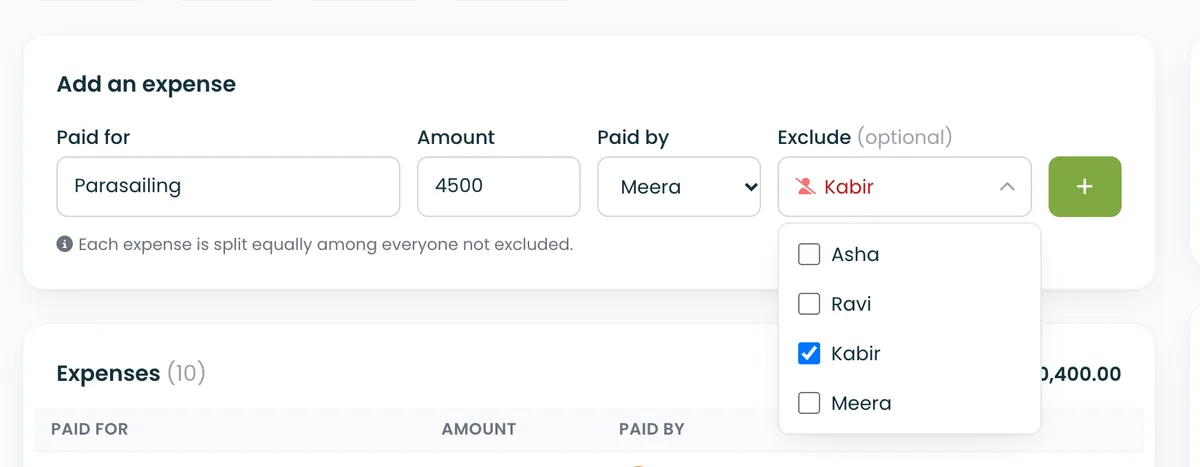
- Use "exclude" for partial groups. Four of six went parasailing: add the bill and exclude the two who stayed on the beach. Everyone else is charged equally.
- Don't log personal spending. Your own coffee is your own coffee. If someone else bought it for you, that's a kindness, not a bill.
- Cash kitty? Some groups collect ₹2,000 each up front for small cash costs. If everyone puts in the same amount and the kitty only pays for things everyone shares, it's already split equally: don't log the kitty or what it buys, and share any leftover back in cash at the end. Pay for anything only some people share separately, and log it.
The end of the trip
- Check the expense list together for anything missing or doubled. Five minutes.
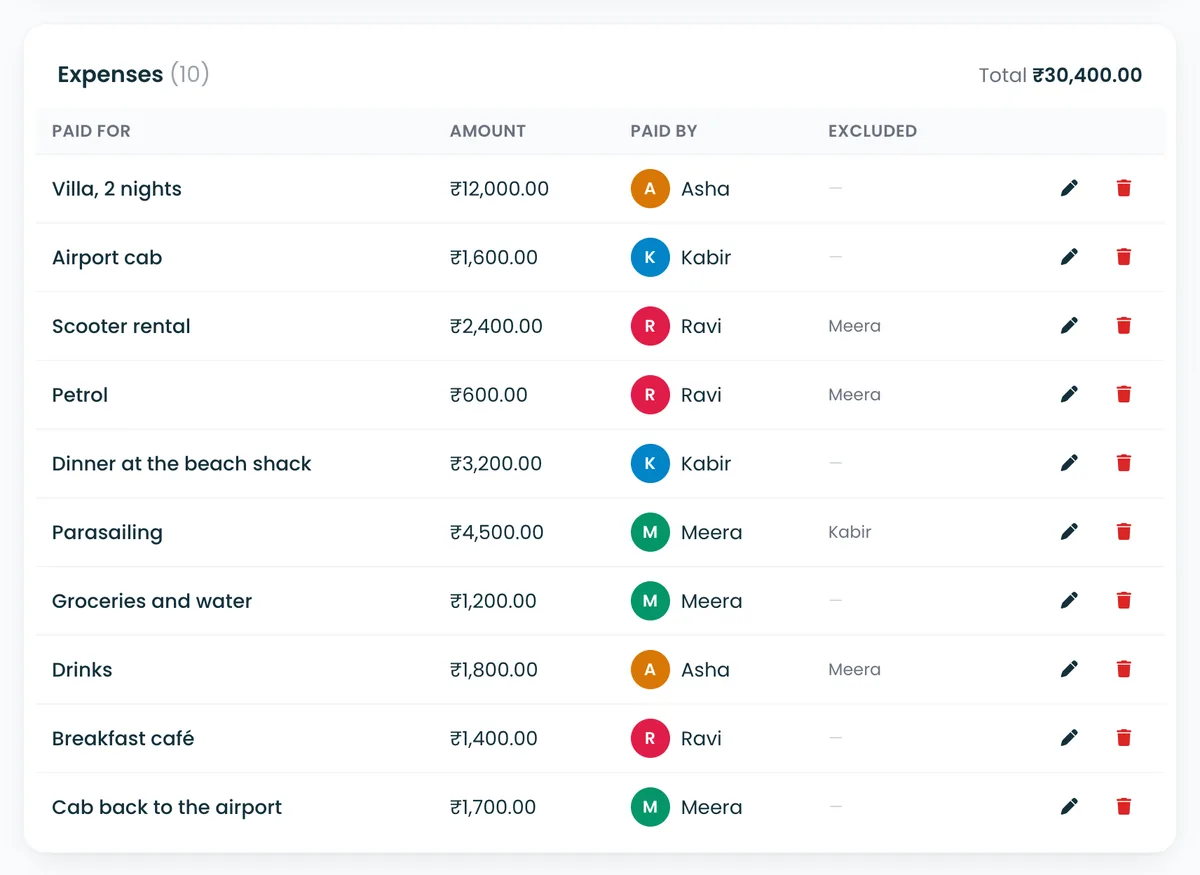
Ten bills from a three-day trip, with who paid and who sat each one out. See who pays whom for this trip. - Read "Who pays whom". It shows the fewest transfers that settle everyone, usually one fewer than the number of people.
- Pay in the order listed. Each line fully clears one person.
- If someone signed in and picked their name, their Your balance card shows just their line, which is easier to act on than the whole table.
Common snags
| Situation | What to do |
|---|---|
| Hotel room shared by 2 of 5 people cost more because it's a suite | Enter the room as its own bill with only those two included |
| One person joined a day late | Exclude them from day-one bills; include them from then on |
| Someone paid with a card for everyone and wants the points | Fine: they're the payer on that bill and get repaid the full amount |
| A bill in a different currency | Convert to the trip's currency when you log it, using the rate your card charged |
Why this works
Most trip arguments aren't about greed. They come from two people remembering a bill differently, three weeks later. A shared log that everyone could see at the time removes the memory problem, and a single settlement at the end removes the "but I already paid you" problem.
Frequently asked questions
How do you split trip expenses with friends?
Agree what is shared before you go, log every shared bill as it happens with who paid and who took part, and settle once at the end. Ezysplit works out the fewest payments that clear everyone.
What if someone joins the trip late or leaves early?
Leave them out of the bills from before they arrived or after they left, and include them in everything else. In Ezysplit, tick their name under Exclude on those bills.
Should we settle up during the trip or at the end?
At the end, once. Paying people back during the trip leads to double counting, such as "I already gave you ₹500 for the cab". Log everything, then settle from the final balances.
How do we split a bill paid in another currency?
Convert it to the trip's currency when you log it, using the rate the payer's card or the exchange actually charged, so the payer is repaid what it really cost them.
More guides
- How to split rent fairly with roommates
- How to split a restaurant bill (even when someone didn't drink)
- Who pays whom: settling a group with the fewest transfers
- Splitting costs when there's a couple in the group
- Planning a group trip budget everyone can live with
- How to ask a friend to pay you back (without making it weird)
- Splitting costs with friends who earn more (or less) than you
- Should you lend money to a friend? Five rules that protect the friendship